It is a 12-gram screenless tracker that lasts 7 days on a charge, fast-charges in 90 minutes, and covers heart rate, SpO2, AFib alerts, and skin temperature all without a mandatory subscription. At $99.99, it undercuts Whoop’s $199–$239/year plans, though Whoop still wins on battery life and deeper analytics for serious athletes. For everyday users wanting simple, screen-free health tracking, it’s one of the strongest value picks of 2026.
Google’s return to the fitness band category has arrived in the form of a screenless, 12-gram tracker that ditches displays and buttons altogether. This Google Fitbit Air review breaks down the design, battery life, features, and pricing based on hands-on reporting from Wired and other 2026 reviewers, to help you decide whether it’s worth buying.

The Fitbit Air is Google’s entry into the Whoop-style “screenless wearable” category. Instead of a display, it relies entirely on the Google Health app to show your stats, while the band itself quietly collects data around the clock: heart rate, sleep, SpO2, and skin temperature inside a tiny pebble-shaped sensor. Announced on May 7, 2026, and available in the US since May 26, it’s positioned as an affordable, subscription-optional alternative to devices like the Whoop 5.0.
This Fitbit Air review sticks to confirmed specs and tested performance rather than marketing claims, so you’re getting an accurate picture before you buy.
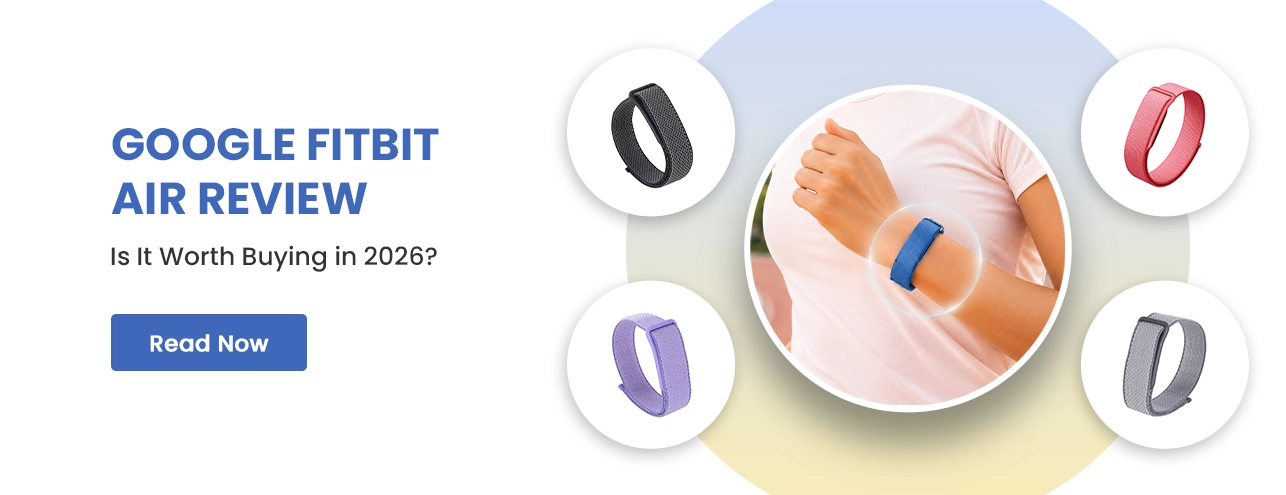
At just 12 grams and roughly 25% smaller than the Fitbit Luxe, the Air is built to disappear on your wrist. The housing is made from recycled polycarbonate and PBT plastics with a matte, rubberised feel, and it ships with a breathable, recycled Performance Loop band. There’s no screen, no buttons, and no notifications, just a small status light and haptic vibrations for alerts. Optional bands include a sweat-resistant Active Band and a premium Elevated Modern Band.

Multiple reviewers, including Wired, note the light weight makes the Air genuinely comfortable for 24/7 wear, including overnight sleep tracking, something bulkier smartwatches typically fail at. Among the confirmed Google Fitbit Air specifications, its weight and recycled-material build set the tone for the rest of the device.
Google Fitbit Air battery life is rated by Google at up to 7 days per charge, largely because there’s no display drawing power. Real-world testing from Tom’s Guide and Engadget puts this closer to 5–7 days depending on workout frequency, with results ranging from 15% remaining after a full week to as low as 4–5 days with heavier use.
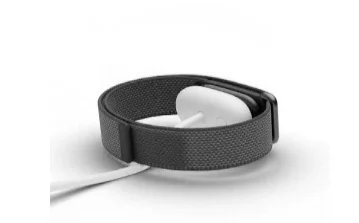
Charging is a genuine strength: a full charge takes about 90 minutes via the magnetic cable, and a 5-minute quick charge delivers roughly a full day’s power. Since there’s no screen, checking battery level requires a double-tap to trigger the status light, white above 20%, blinking red when low.
Nearly all of the Google Fitbit Air features live inside the Google Health app, which replaced the standalone Fitbit app on May 19, 2026, and runs on Android and iOS. Confirmed sensors include a 24/7 optical heart rate monitor, a 3-axis accelerometer and gyroscope, red and infrared SpO2 sensors, AFib alerts, and a skin temperature sensor. Data syncs over Bluetooth 5.0; there’s no built-in GPS, so outdoor runs still need your phone nearby.
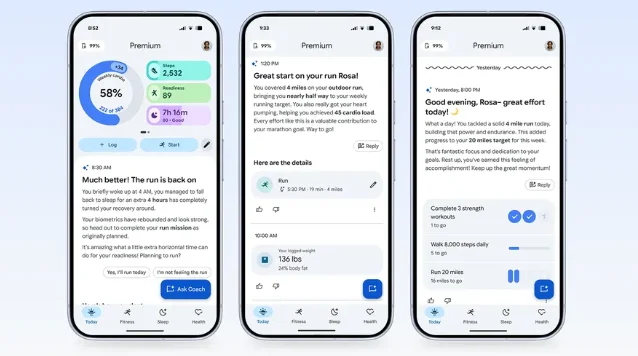
As detailed in our Google Fitbit Air review, the headline addition is the Gemini-powered Google Health Coach, which analyses your data to suggest workouts, rest days, and routine adjustments. Reviewers find it useful for beginners, but several, including 9to5Google flagged generic advice for more experienced users. Core tracking (steps, heart rate, sleep, SpO2, Cardio Load) works fully without a subscription, making the Coach a bonus rather than a requirement.
The Google FitBit Air price starts at $99.99 for the standard model (roughly ₹9,500), with a Special Edition co-designed with Stephen Curry at $129.99. Every purchase includes a three-month trial of Google Health Premium, after which it costs $10/month or $100/year optional, and only needed for the full Health Coach.
No official India launch date has been confirmed yet, though the device is listed as “upcoming” on Indian retail trackers, with expected pricing around ₹8,000–10,000.
Whoop remains the more advanced option for serious athletes: it samples heart rate far more frequently and claims up to 14 days of battery life, double the Air’s rating. But it requires an ongoing subscription ($199–$239/year for Whoop 5.0), which adds up over time. The Fitbit Air is a one-time $99.99 purchase with fully usable core features, making it a stronger fit for casual users who want a best screenless fitness tracker without an annual bill.

Here’s a quick Google Fitbit Air pros and cons breakdown:
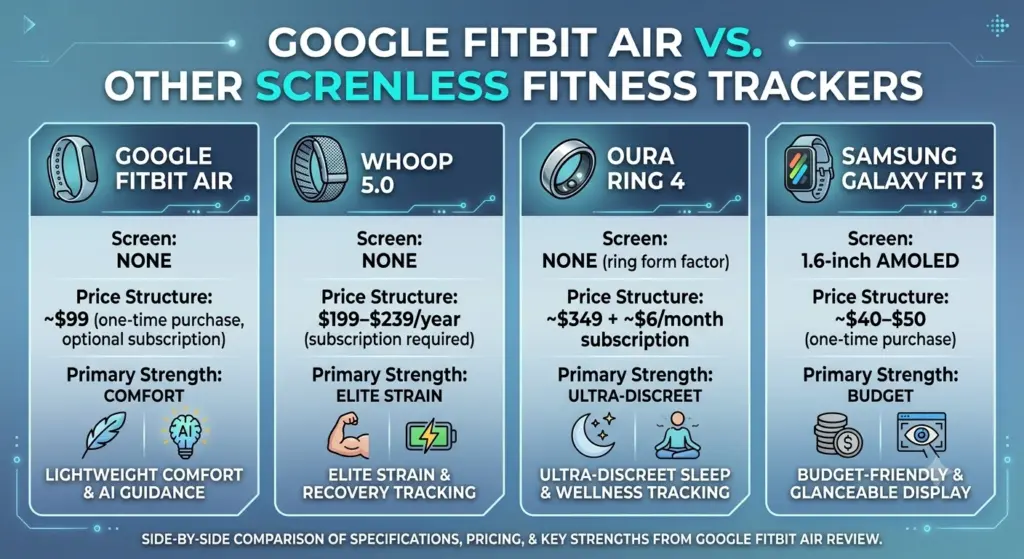
To see how the Fitbit Air stacks up against the top market alternatives, here’s a quick side-by-side comparison of specifications, pricing, and key strengths from this Google Fitbit Air review.
| Tracker | Screen | Price Structure | Primary Strength |
|---|---|---|---|
| Google Fitbit Air | None | ~$99 (one-time purchase, optional subscription) | Lightweight comfort and AI guidance |
| WHOOP 5.0 | None | $199–$239/year (subscription required) | Elite strain and recovery tracking |
| Oura Ring 4 | None (ring form factor) | ~$349 + ~$6/month subscription | Ultra-discreet sleep and wellness tracking |
| Samsung Galaxy Fit 3 | 1.6-inch AMOLED | ~$40–$50 (one-time purchase) | Budget-friendly option with a glanceable display |
For anyone asking if Google Fitbit Air is worth buying, it comes down to what you need from a tracker. Everyday users who want screen-free health monitoring and no mandatory subscription will find the Fitbit Air one of the more balanced fitness trackers of 2026.
Serious athletes needing precise HRV data may still prefer Whoop, but for most people, the Fitbit Air delivers strong Google Fitbit Air performance at a price that’s hard to match.
Up to 7 days under normal use, closer to 5 days with heavier workout tracking.
Double-tap the device; white light means over 20% charge, blinking red means low below 20%.
No. Heart rate, sleep, and SpO2 tracking are free. Premium ($10/month) only unlocks the AI Health Coach.
Optical heart rate, 3-axis accelerometer/gyroscope, red/infrared SpO2 sensors, and skin temperature. You’ll find similar sensor-equipped devices across Ubuy’s fitness trackers category.
The Fitbit Air fully charges from 0 to 100% in approximately 90 minutes. If you’re pressed for time, a quick 5-minute charge can give you about one day’s worth of battery life.
At 12 grams, reviewers found it comfortable for continuous wear, including sleep, making it a solid pick from Ubuy’s broader fitness and exercise range for everyday workout gear.
Whoop has longer battery life and more frequent sampling but needs a subscription. The Air is a one-time purchase with free core tracking; both fall under Ubuy’s wider sports, outdoor and fitness collection if you want to compare more options.
Not fully. It’s rated 5 ATM, fine for showers and shallow water, but not marketed as waterproof.

Ubuy content team consist of various writers specializing in different niches. They write blogs about different topics ranging from science, human relationships to the latest technology to share their thoughts, ideas and knowledge with the world.

Get every Newsletter