Think about your morning routine. You wash your face, use a clean towel, and apply your favourite serum. Then, you pick up a hairbrush packed with weeks of old strands, gray lint, and oily residue, running it right through your fresh hair.
It sounds gross because it is. Dermatologists compare a dirty brush to an unwashed bath towel. It traps sebum, atmospheric pollution, dead skin cells, and product crust. When you reuse it, you transfer that grime right back to your scalp. In India’s intense heat and humidity, this mixture turns into a breeding ground for yeast and bacteria.
If your scalp feels constantly itchy or your hair turns greasy just a day after washing, your tool is the culprit. Let’s look at the absolute best way to clean hairbrush types at home with simple, practical steps.

According to top trichologists (hair and scalp experts), an unwashed brush acts like a magnet for dirt. Brushing with a dirty tool can disrupt your scalp’s natural microbiome. This leads to irritation, dandruff, and weak roots.
Regular cleaning removes these impurities, allowing your brush bristles to glide smoothly without snagging or causing unnecessary hair breakage. It also extends the lifespan of your grooming tools and hair-styling products, saving you money in the long run.
Cleaning different brushes requires different techniques. Plastic detanglers can take a good soaking, while wooden options require gentle care. Here is the best way to clean combs and brushes at home without ruining them.

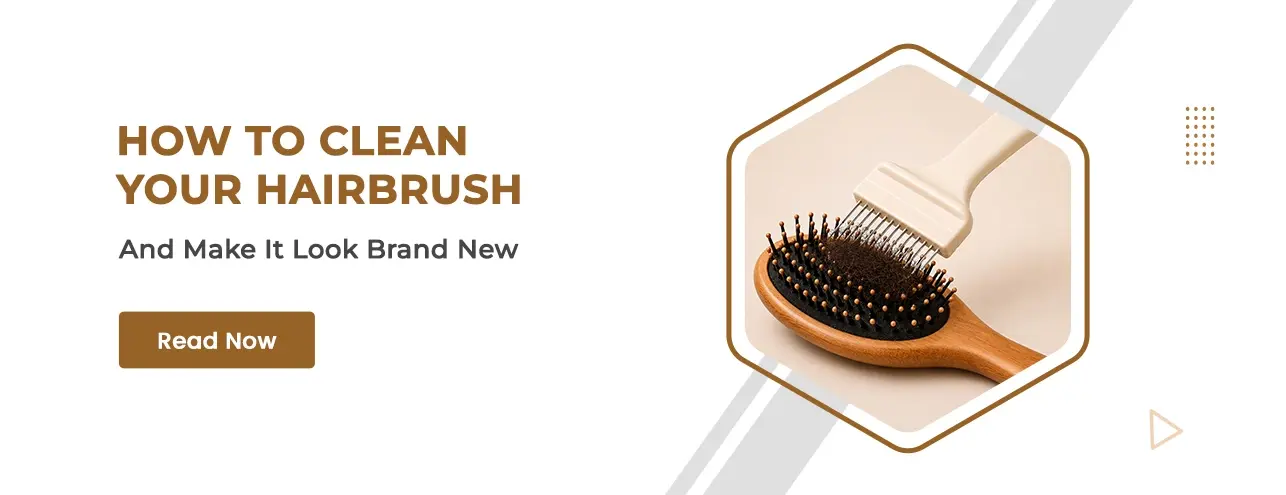
Before introducing any water, you must clear out the interwoven mesh of old hair. The best way to get hair out of brush beds is to use the tail end of a rat-tail comb or a dedicated hairbrush hair remover tool. Gently slide it under the trapped hair and lift upward to loosen the clump. For stubborn patches, use a pair of scissors to snip down the centre of the hair mass, making it much easier to slide off.
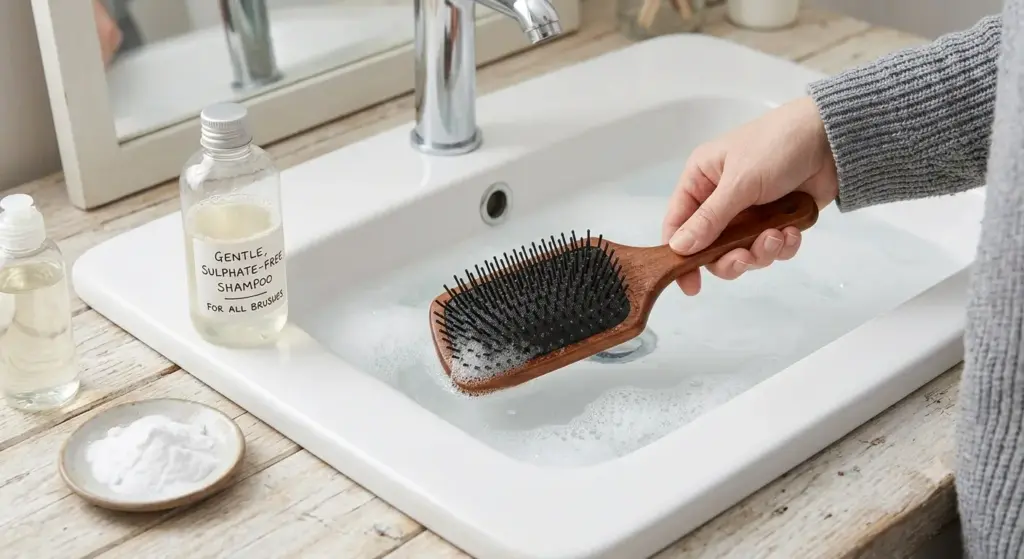
You do not need expensive commercial hairbrush cleaners from your beauty & personal care for this step. A simple hairbrush cleaner solution can be made right in your bathroom using everyday household items, customised to your brush type. This solution can be the best way to disinfect hair brushes:
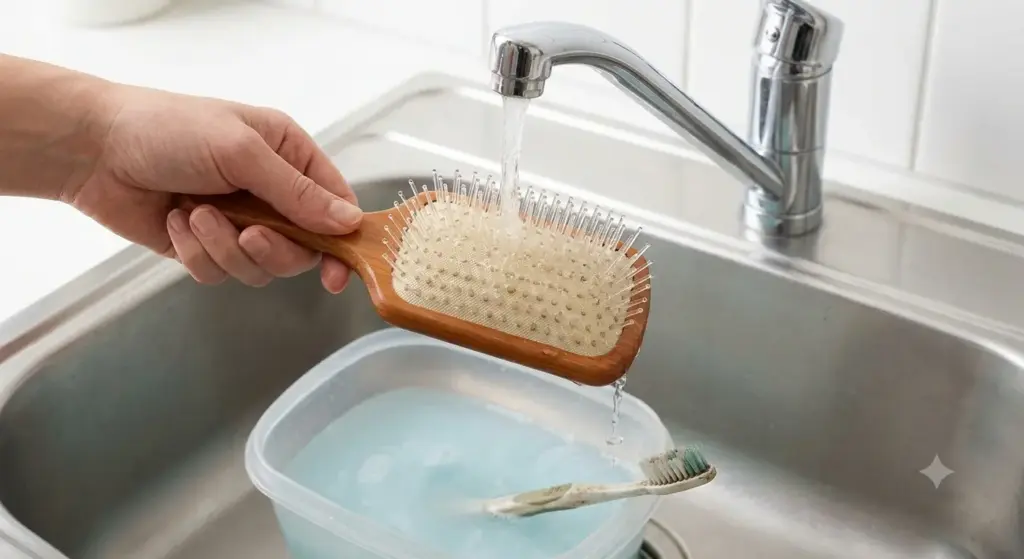
Rinse the bristles thoroughly under running warm water. How you handle this step depends entirely on the construction of your brush:
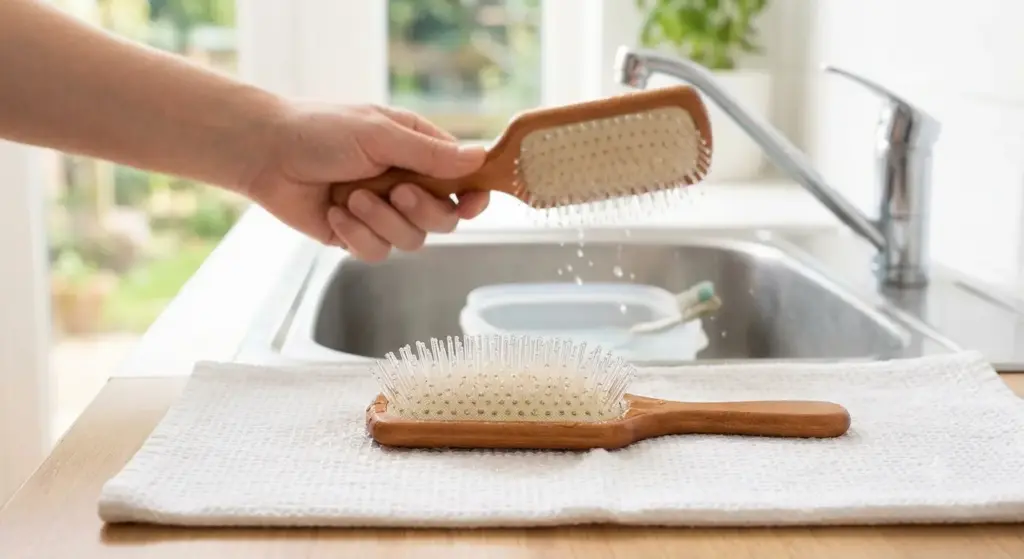
Shake out the excess water. Place the brush face down on a clean cotton towel. This allows water to drain out of the cushion rather than pool inside, which protects the glue that holds the bristles. Let it air dry completely in a well-ventilated room.
Different brushes require distinct care routines to prevent premature damage and improve your hair care:
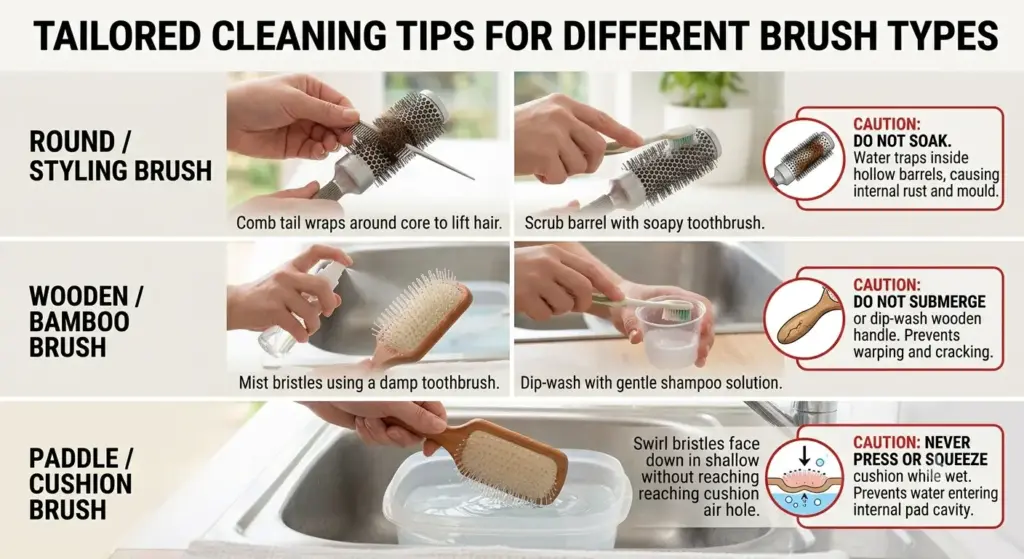
| Brush Type | Cleaning Method | Caution |
|---|---|---|
| Round / Styling Brush | Wrap a comb tail around the core to lift hair. Scrub the barrel surface with a soapy toothbrush. | Do not soak; water traps inside hollow barrels, causing internal rust and mould. |
| Wooden / Bamboo Brush | Mist or scrub the bristles using a damp toothbrush dipped in a gentle shampoo solution. | Do not submerge or dip-wash the wooden handle or base in water to prevent warping and cracking. |
| Paddle / Cushion Brush | Swirl the bristles face down in shallow water without allowing the water level to reach the cushion air hole. | Never press or squeeze the cushion while wet, as this pumps water into the internal pad cavity. |
Taking care of your hair tools is just as important as choosing the right shampoo or serum. In a diverse country like India, where our hair battles everything from monsoon humidity to city dust, a clean tool is your first line of defence against stubborn scalp issues. Knowing how to clean your hairbrush isn’t just a chore, it is an essential step toward healthier, shinier, and more resilient hair.
Whether you are looking for the best way to clean lint from hair brush sets in your vanity or simply trying to get the clean hair brush results that salon professionals swear by, consistency is key. Set aside just 10 minutes every 2 weeks to wash away hidden grime, oil, and product buildup. Your scalp will thank you, your hairstyles will look fresher, and your favourite brushes will last for years to come.
Experts recommend removing trapped hair after every few uses, or at least once a week. You should give your brush a deep, soapy wash every two weeks. If you use heavy hair oils, styling creams, or gels daily, aim to wash your hair once every week.
For standard plastic or synthetic brushes, the easiest method is to remove loose hair with a comb, soak the bristles in warm water mixed with a gentle shampoo for 5 minutes, scrub with an old toothbrush, and dry them face down on a towel.
Mix warm water with a few drops of gentle shampoo. Dip an old toothbrush into the liquid and lightly scrub the bristles and base. Wipe the wood with a dry cloth immediately. Never soak a wooden brush in water.
To tackle a heavily soiled synthetic brush, first remove all physical hair. Mix warm water, 1 tablespoon of shampoo, and 1 teaspoon of baking soda. Soak plastic brushes for 10 to 15 minutes. Use a toothbrush to scrub away the stubborn grey lint, then rinse thoroughly.
Yes. A dirty brush harbours bacteria and stale oils that can cause scalp irritation, folliculitis (inflamed hair follicles), and dandruff. Cleaning your brush keeps your scalp healthy, which directly supports stronger roots and reduces avoidable hair fall.
The best way to clean round hairbrush models and paddle brushes is to slide a chopstick or the tail of a rat-tail comb underneath the tangled hair layer. Lift it up to create a gap, then use scissors to snip through the strands before pulling them free.

Ubuy content team consist of various writers specializing in different niches. They write blogs about different topics ranging from science, human relationships to the latest technology to share their thoughts, ideas and knowledge with the world.

Get every Newsletter